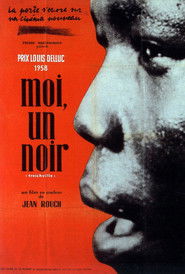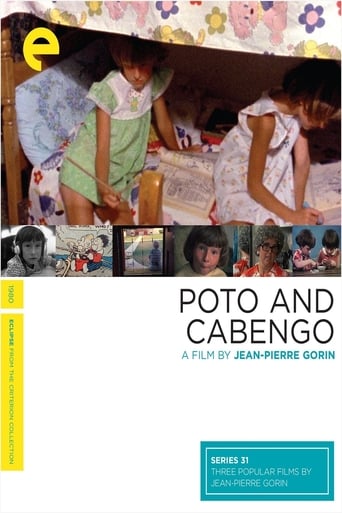
Gorin himself sees Poto and Cabengo as a continuation of his earlier efforts at 'subjective cinema' (as with Godard, he rejects the very idea of 'objective cinema') combined with elements of what he calls 'filmed ethnography,' which he says started for him with Jean Rouch’s Moi, un noir (1958) and was further developed by Godard and others of his New Wave colleagues.
Poto and Cabengo as a continuation of his earlier efforts at 'subjective cinema' combined with elements of what he calls 'filmed ethnography,' which he says started for him with Jean Rouch's Moi, un noir (1958).
— Jean-Luc Gorin · Senses of Cinema: Jean-Pierre Gorin (Great Directors)
Poto and Cabengo is a continuation of his earlier efforts at 'subjective cinema' combined with elements of 'filmed ethnography,' which started for him with Jean Rouch's Moi, un noir (1958) and was further developed by Godard and others of his New Wave colleagues.
Poto and Cabengo as a continuation of his earlier efforts at 'subjective cinema' combined with elements of 'filmed ethnography,' which started for him with Jean Rouch's Moi, un noir (1958).
— Jean-Luc Gorin · Senses of Cinema: Jean-Pierre Gorin (Great Directors)
Films That Influenced Poto and Cabengo